

Amazônia Real: Gamifying deep investigative journalism in the Amazon
Project name: The Amazon Game (O Jogo da Amazônia)
Newsroom: Amazônia Real (Brazil)
Solution: An interactive, gamified news experience built as an open-source WordPress plugin transforming archive reporting into ethical decision-making scenarios
Organisation staff size: 10 - 20
Tech stack: RAG architecture, WordPress plugin framework, vibe-coded scripts, local archive database
Impact: Tripled website dwell time during testing and increased Gen Z engagement without recurring AI cloud costs
Core lesson: Leverage natural language vibe coding to build custom software on tight budgets while grounding AI in archives to prevent hallucinations
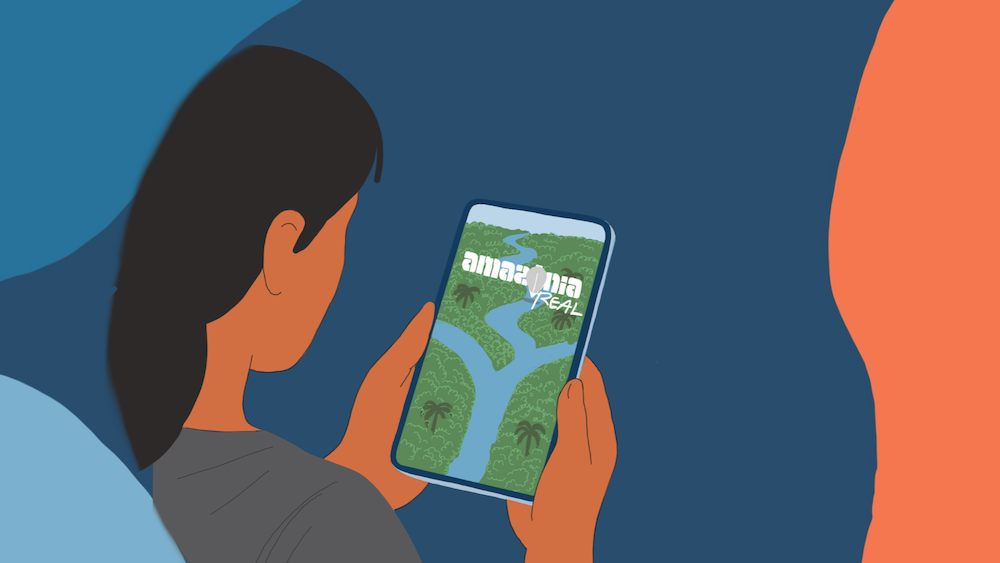
When journalists Kátia Brasil and Elaíze Farias founded Amazônia Real in Manaus, Brazil, back in 2013, they set out with a clear, uncompromising mission: to give a voice to the communities and critical stories across the Amazon that mainstream media often overlooked. Operating as an independent, non-profit newsroom, they flipped traditional reporting on its head by centring Indigenous leaders, communities, and local residents long before turning to official government or corporate sources. This work received international recognition, including the King of Spain International Journalism Award.
To safeguard their editorial independence, they firmly refused government funds or donations from companies linked to environmental destruction. Instead, they relied on reader crowdfunding and support from philanthropic partners like the Ford Foundation, Open Society Foundations, Climate and Land Use Alliance, Re:wild and the Google News Initiative.
For their JournalismAI Innovation Challenge project, led by project coordinator Eduardo Nunomura alongside Brasil, Farias, and image editor Alberto César Araújo, the team embarked on an ambitious experiment: translating over a decade of deep investigative reporting into an interactive, immersive news game called The Amazon Game (O Jogo da Amazônia in Portuguese).
The problem: Bridging the Gen Z engagement gap
Despite producing groundbreaking investigative work, Amazônia Real ran into a frustrating obstacle that many publishers face: capturing the attention of younger, mobile-first Generation Z readers. Nunomura recalled seeing students fascinated years ago by gamified experiences like The New York Times's Olympic Bodies, proving that interactive formats could make complex subjects compelling.
Yet, shortening or dumbing down deep investigations was entirely out of the question for a newsroom fiercely committed to narrative integrity.
At the same time, tests conducted by the Amazônia Real team revealed how ungrounded, commercial generative AI tools were exacerbating the problem. When evaluating general-purpose conversational AI bots without RAG tied to their local archives, the team found that for queries about the Amazon, the answers were often generic, postcard-like responses, or outright inaccurate. Without access to specialised, ground-level reporting, these off-the-shelf models consistently missed the critical human and ecological nuances that Amazônia Real had spent over ten years documenting.
To make matters harder, finding developer talent proved nearly impossible. Software agencies and individual developers quoted around 60 to 70 per cent of their entire project budget, while off-the-shelf quiz builders lacked the depth required for real-world investigative scenarios.
Building the solution: Vibe coding an immersive news game
Determined to bridge this gap without blowing the budget, Nunomura leveraged his background in computer science and journalism from the University of São Paulo to pioneer an agile AI workflow. Using vibe coding - where human editors dictate logic, structure, and editorial architecture in natural language while AI generates code - he built a prototype within three weeks. What was initially meant as a simple sketch to convince developers quickly evolved into a fully functional open-source WordPress plugin.
The resulting product, The Amazon Game, puts readers directly into the shoes of local actors, such as an Indigenous leader, a farmer, or a policymaker, navigating 10 challenging real-world scenarios. To prevent AI hallucinations, the newsroom implemented RAG technology, grounding every scenario and option strictly in Amazônia Real's archive of over 4,000 investigative reports spanning over 10 years.
After making tough choices involving complex economic, social, and environmental trade-offs, players receive a personalised profile that directs them back to original full-length articles on the website.
Technology moved quickly, but rigorous human-in-the-loop oversight remained essential. Brasil and Farias meticulously checked and refined all 104 AI-generated dilemmas, eliminating stigmatised interpretations and repetitive clichés regarding the Amazon to uphold strict factual standards and regional authenticity. Meanwhile, Araújo curated the game's imagery and co-designed the visual user experience.
The opportunities: Charting the path forward
The outcomes exceeded expectations during beta testing with over 80 journalism students at Faculdade Cásper Líbero. A remarkable 96 per cent of participants confirmed learning entirely new facts about the Amazon, while session times averaged between 5 and 10 minutes - more than tripling the typical dwell time on Amazônia Real's main website.
As younger audiences increasingly turn to quick summaries and conversational chatbots for answers, gamified decision-making offers a compelling reason for readers to visit Amazônia Real directly. Most importantly, because the software is being released as a free, open-source, plug-and-play WordPress plugin, any independent newsroom can adapt the tool to re-engage their own audiences without paying prohibitive third-party development costs.
To engage mobile-first Gen Z readers without relying on expensive user acquisition or paid advertising, the newsroom established partnerships with high schools in Manaus and São Paulo to adopt the game as educational material. Furthermore, the plugin's distribution model is decentralised by design: by offering the News Game Plugin as a free, open-source tool for independent and regional newsrooms, each adopting local outlet brings its own community into the experience, enabling young people to engage deeply with journalistic content through a gamified format.
Lessons for newsrooms
Human verification is non-negotiable: While AI tools can draft code and structure scenarios in seconds, human editorial verification remains an intentionally deliberate process that requires adequate time and resources.
Empower lean teams with vibe coding: Natural language prompting and vibe coding allow lean newsrooms to build custom, functional technology without spending huge chunks of the AI budget on external developers.
Grounded AI prevents hallucinations: Restricting AI models to an archived dataset via RAG is vital to avoiding hallucinations and preserving editorial trust.
Prioritise plug-and-play distribution: Newsrooms building tools for wider adoption must focus on seamless, plug-and-play integrations, like WordPress plugins, to eliminate technical hurdles for fellow journalists.
Explore case studies from the 2025 cohort
The 2025 Innovation Challenge Report, Prompting Sustainability, collects case studies from all 12 grantees and reveals their journeys, challenges, and opportunities.
Read about their experiences, discover best practices, and find inspiration in their innovative approaches to integrating AI into journalism.
The JournalismAI Innovation Challenge, supported by the Google News Initiative, is organised by the JournalismAI team at Polis – the journalism think-tank at the London School of Economics and Political Science, and it is powered by the Google News Initiative.
