
Civio: How to build an in-house AI agent for donor management
Project name: TobIAs (In-house AI agent)
Newsroom: Fundación Ciudadana Civio (Spain)
Solution: Privacy-first, local AI agent integrated into Slack to automate administrative donor management
Organisation staff size: 10 - 20
Tech stack: Mac Studio with 64GB RAM (local hardware), open-source LLM (Gemma 4, served via oMLX), Butterbot (open-source Node.js Slack agent framework), Slack API, Stripe, Mailchimp
Impact: Reduced administrative bottlenecks for technical leadership and empowered non-technical team members
Core lesson: Run open-source models locally to safeguard sensitive data, and use pre-scripted skills to constrain LLMs
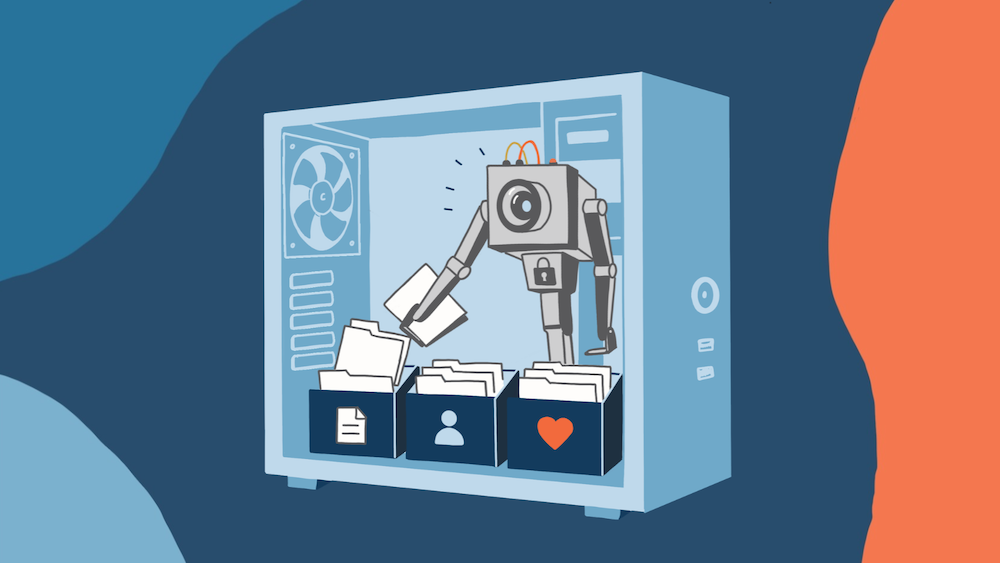
This small Spanish investigative newsroom built a privacy-focused local AI assistant to streamline donor operations and support its growth.
The problem: Managing fragmented systems and administrative bottlenecks
Civio is an 11-person non-profit newsroom in Madrid, Spain, focused on investigative reporting and public accountability. Over 45 per cent of its revenue comes from more than 2,300 small donors. Co-founder and tech lead David Cabo noted: "Almost half of our revenues come from members... but as you grow, manual processes become a pain."
Years of organic growth left Civio with fragmented systems across Stripe, Mailchimp, PayPal, direct bank transfers, and an internal CRM. Handling routine requests, like updating addresses, changing fee amounts, or issuing tax certificates, required manually cross-referencing multiple administrative portals.
Much of the technical knowledge was heavily concentrated with Cabo, who recalled that "a lot of day-to-day tasks were in my head... handling members was becoming a burden." The complexity of dashboards like Stripe also prevented non-technical staff from taking over donor management.
Building the solution: TobIAs and the local AI agent architecture
During the JournalismAI Innovation Challenge, Civio developed TobIAs (a play on the name Tobías and AI), an AI assistant accessible via Slack. The assistant is built on Butterbot, a minimal Slack agent framework (Node.js) that Civio wrote during the programme and published as open source.
To uphold General Data Protection Regulation (GDPR) compliance and respect donor trust, Civio established an absolute rule: donor data must never leave the office. "From the beginning we decided that we had to use something locally because our members are very sensitive to data protection issues and so on. So we didn't want to send their private data like accounts and so on to the cloud," Cabo explained. Rather than using cloud-based AI endpoints, Civio installed a 64GB Mac Studio in its Madrid office, deploying an open-source model (Google’s Gemma 4, with 26 billion parameters) running on a local inference engine (oMLX).
Early tests showed that allowing a local open-source large language model (LLM) to navigate the database freely resulted in slow, clumsy, and inaccurate responses. To fix this, Civio developed pre-scripted "skills": deterministic API scripts for specific tasks (e.g., changing subscription fees, updating addresses, checking billing failures, or tagging members in Mailchimp). TobIAs identifies the correct skill based on a user's natural-language request and triggers the corresponding script.
Under the hood, TobIAs is deliberately simple. It connects to Slack over Socket Mode, so the machine needs no public address and can sit behind the office firewall. The model gets four basic tools (run a shell command, and read, write or edit a file) inside a Docker container, and a list of skills. Each skill is a Markdown file describing when to use it, with real example requests, plus a script that calls the CRM, Stripe or Mailchimp API. Skills are written and tested with a frontier coding model and kept in a version-controlled GitHub repository, but in production only the local model runs, and only the local model sees donor data. Any change to donor data, such as a cancellation or a switch to direct debit, is first shown as a dry run and goes through only when a person confirms it. And every interaction is logged with its speed and token use, so the team can compare models on evidence when deciding whether to upgrade, and keep track of the agent work if needed.
Team interactions with TobIAs take place in a dedicated public Slack channel. Cabo emphasised that, "for this member task, you can only talk to the bot in the public channel where most of the team is... so anyone can see what's going on. So if something breaks we all see it and then also it means that the whole team is learning." This keeps human-in-the-loop control while simultaneously helping non-technical staff learn how to interact with AI agents by observing shared threads. Working in the open is also part of the security model: most open-source agents are built for a single user, and controlling what each person can ask a shared agent is hard to get right. Civio makes donor skills available only in shared channels, so every request is visible to the team.
Before writing code, Civio spent a month drafting clear organisational AI guidelines approved by its Board of Trustees. The policy states that AI will never write articles, act as an information source, fact-check, generate images, or communicate directly with members without human oversight.
Although Civio cannot provide exact figures for time saved, as baseline task durations were not measured and the internal launch was recent, Cabo highlighted significant practical business benefits of TobIAs. First, the tool enables much faster responses, allowing any team member to handle member status checks or fee adjustments immediately in a single message rather than waiting for technical staff, which helps leadership prioritise donor inquiries.
Second, by eliminating a single point of failure, TobIAs enabled staff members unfamiliar with the CRM to process donor requests during key team absences, preventing administrative backlogs. This ease of use has driven wide adoption across the organisation, with non-development colleagues initiating 73 per cent of interactions in September and expanding overall team awareness of donor systems.
Third, the rapid data retrieval allows for quick analysis of member patterns, such as churn drops, in roughly a minute instead of relying on manual spreadsheet exports. Finally, because TobIAs runs open-source models on existing internal hardware, it operates at a near-zero running cost by avoiding ongoing API licensing fees.
The opportunities: Streamlined operations and editorial expansion
TobIAs has made Civio’s operations more efficient and less dependent on key individuals. Staff can handle donor requests in plain language, freeing leadership to focus on strategic membership campaigns.
Civio plans to expand TobIAs into knowledge management and research, connecting it to GitHub and shared drives to search past reporting leads and using local vision models to OCR scanned public documents for investigative leads.
Lessons for newsrooms
Keep sensitive data in-house: Newsrooms can run capable open-source models on local desktop hardware to maintain full data sovereignty and GDPR compliance.
Constrain LLM freedom with pre-defined skills: Do not rely on LLMs to invent database queries on the fly. Create discrete, structured scripts for predictable tasks and use the LLM primarily as an intent classifier and task router. Force the LLM to ask for human confirmation before destructive actions.
Deploy agents in shared spaces: Placing AI tools in public communication channels (like public Slack channels) creates transparency, reduces error risk, and helps upskill non-technical team members organically.
Document internal operations first: The hardest part of building an operational AI agent is documenting informal institutional knowledge. Explicitly structuring workflows yields organisational value regardless of the AI implementation.
Explore case studies from the 2025 cohort
The 2025 Innovation Challenge Report, Prompting Sustainability, collects case studies from all 12 grantees and reveals their journeys, challenges, and opportunities.
Read about their experiences, discover best practices, and find inspiration in their innovative approaches to integrating AI into journalism.
The JournalismAI Innovation Challenge, supported by the Google News Initiative, is organised by the JournalismAI team at Polis – the journalism think-tank at the London School of Economics and Political Science, and it is powered by the Google News Initiative.
