
Why readers leave (and what we're building about it)
Read how Philippine newsroom Rappler is building an Intelligent Reader Assistant that helps readers contextualise news using the organisation’s existing reporting and information structures

The team at Rappler.
By: Don Kevin Hapal, Rappler
Most news personalisation today is designed to get you to click, not to help you understand. When algorithms pick stories based on what's likely to get a tap, not what would give you the context to make sense of what you're reading, the result is a news ecosystem that's wide but shallow.
It’s a world where readers see more headlines than ever, but each story sits on its own, disconnected from the reporting that came before it.
For newsrooms that cover complex, long-running stories, this is a real challenge. Context gets lost. Meaning gets waylaid. Readers who want to go deeper have nowhere to go but Google. This ultimately dilutes — or even distorts — information that helps citizens make informed decisions and choices.
It’s a predicament that Rappler needs to address, a newsroom that covers politics, accountability, disinformation, and the world’s seemingly intractable problems. Our stories frequently reference legal mechanisms, political networks, and events that span years or even decades.
For instance, a story about the criminal charges against Rodrigo Duterte at the International Criminal Court (ICC) only makes sense if you know what the Rome Statute is, when the Philippines withdrew from it, and why the court still claims jurisdiction. We've covered all of that, across over 400,000 published articles. But if a reader lands on just one from social media, they have no easy way to access the rest.
That gap between what Rappler knows and what a reader can actually reach mid-article is something we've been trying to close for years.
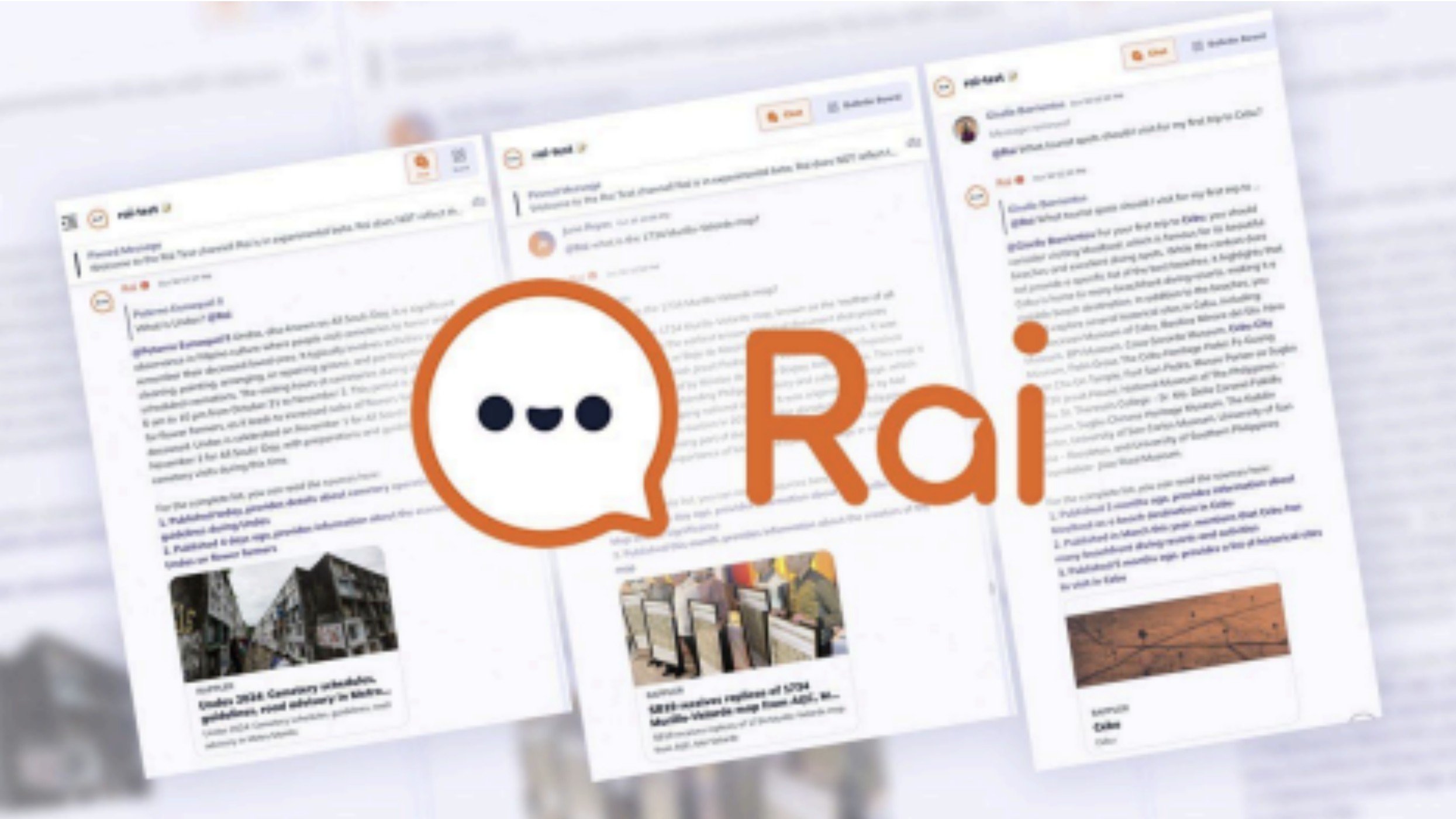
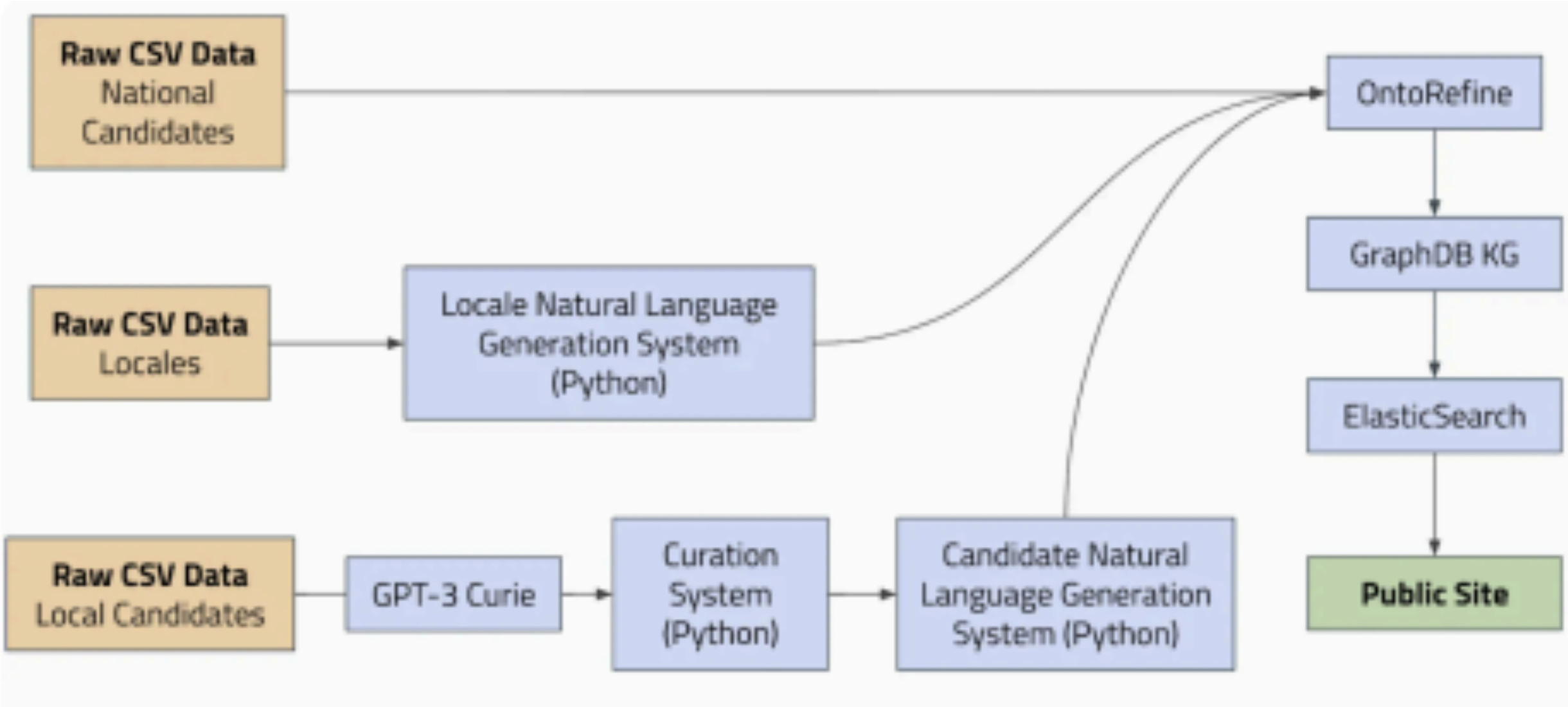
In 2022, we built the first Philippine politics knowledge graph: a structured database that maps the relationships between politicians, government bodies, parties, and locales. We organised our website around topics rather than traditional newspaper sections, so stories are linked by subject — not by when they were published. We launched Rai, an AI chatbot that answers reader questions using only Rappler's vetted journalism. And we've been tagging and enriching our archive so it can be queried, surfaced, and reused.
Each of these was a step toward making what we've already reported more accessible to readers. The Intelligent Reader Assistant is the next one.
Helping readers find the context they need
The Intelligent Reader Assistant is a suite of AI-assisted features developed with backing from the JournalismAI Innovation Challenge, supported by the Google News Initiative. Where Rai lets readers ask questions about our journalism conversationally, the Intelligent Reader Assistant works differently by bringing the context to the reader without them having to ask.
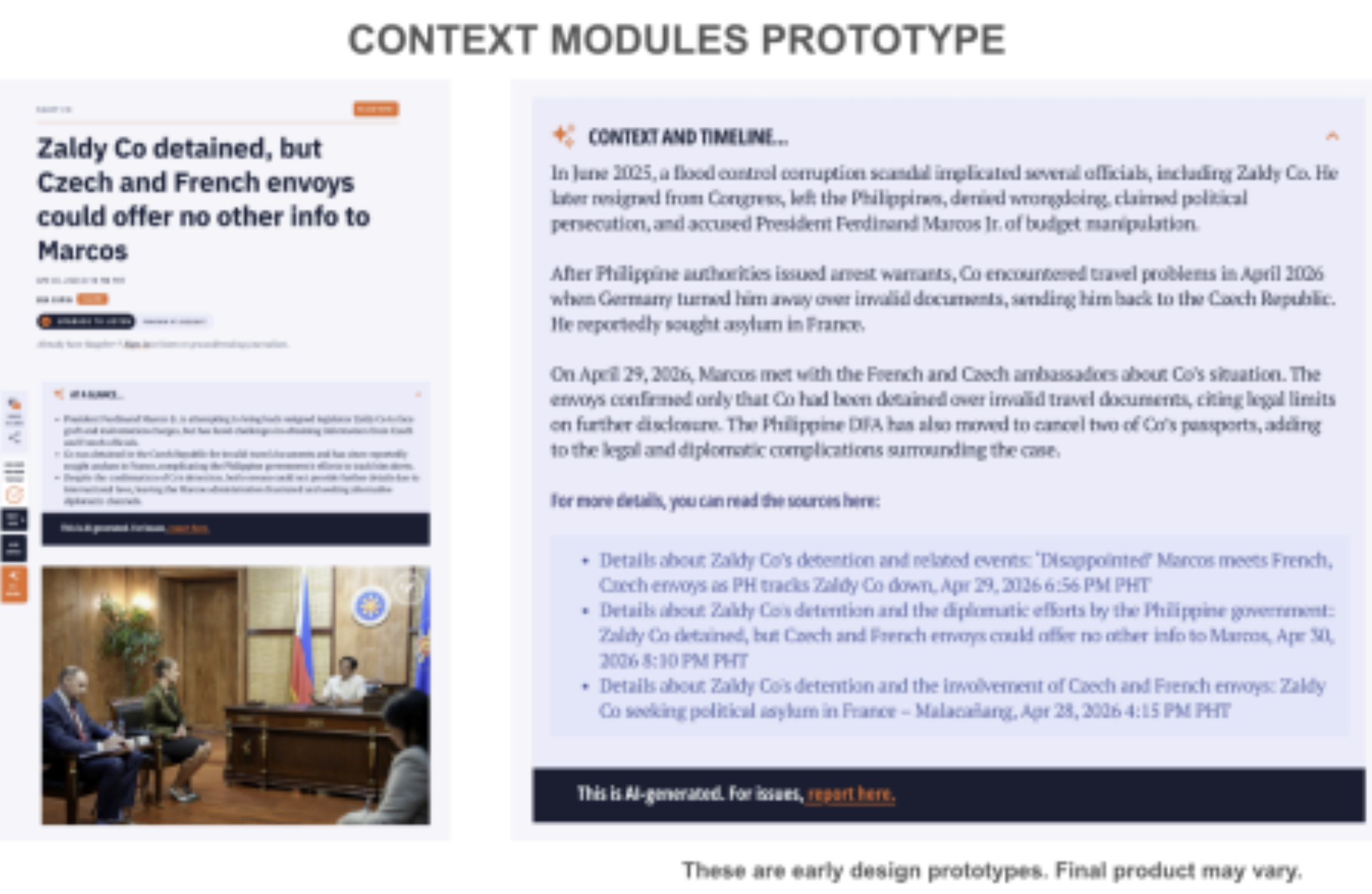
When a story mentions a person, an agency, or an event a reader might not know, the context module explains it right there on the page. When readers finish an article, a smarter recirculation layer suggests what to read next based on the story they just read, not just what's trending.
When they want to stay on top of a developing story, a topic-follow system keeps them updated. And for subscribers, a personalised home base and a catch-up recap would help them pick up where they left off.
All of it draws from the same foundation: the knowledge graph, the topic architecture, and the 400,000-article archive that our newsroom has been building since 2012.
Why we think this will work
Only about 15% of sessions on Rappler involve more than one page. That number reflects something deeper than short attention spans.
There's a concept in cognitive science called information foraging theory, developed by Peter Pirolli and Stuart Card at Xerox PARC in the late '90s. It borrows from ecology: just as animals follow scent trails to find food, people follow "information scent" when they read — cues that signal whether the next paragraph or the next click will be worth it. When the scent is strong, readers keep going. When it fades — an unfamiliar name, a legal term, a reference to something they missed — they leave.
We designed the Intelligent Reader Assistant around that idea. The job isn't to push more content to readers. It's to strengthen the scent trail using information we've already reported and structured.
What readers told us
We ran two surveys before building anything — a sitewide intercept of 336 respondents and a targeted survey of 100 registered users and subscribers — plus a full analytics audit.
About two-thirds of readers said they need additional context "often" or "almost always" when reading complex stories. When they don't get it, over half leave Rappler to search for background elsewhere. Only about eight percent give up entirely. Everyone else fills the gap — just on someone else's platform.
Appetite for topic-following was high — around 80 percent expressed interest — but most people said they can realistically track only one to three topics. So the design has to be focused. And the analytics confirmed that the article page is the whole game. For most of our audience, it's the only Rappler surface they'll ever see.
These are still theories. We could be proven wrong. But they give us a starting point.

Where we are and what's ahead
We've finished the requirements definition phase: user stories, UI and UX designs for the story page, and use cases mapped to metrics.
The measurement framework is simple: pageviews equals users times sessions per user times views per session. Each Intelligent Reader Assistant feature targets one of those multipliers. Context and recirculation drive depth — more pages per visit. Topic Follow and Home Base drive frequency — more visits per user.
Development continues in phases: first with content summaries, then the context module, basic topic-following, and eventually the subscriber home base. Each release will be tested against whether it helps readers move from a single article into deeper understanding.
Some of this will work. Some won't. But the bet is that readers leave not because they don't care, but because we haven't yet made 400,000 articles' worth of understanding available at the moment they need it.
_____
This article is part of a series providing updates from the second cohort of the JournalismAI Innovation Challenge, supported by the Google News Initiative. To read articles from our other grantees, click here.