
How The Reporter uses AI to better understand long-term financial support
This Taiwanese news organisation is exploring how AI tools can help them understand donation patterns and support long-term reader revenue
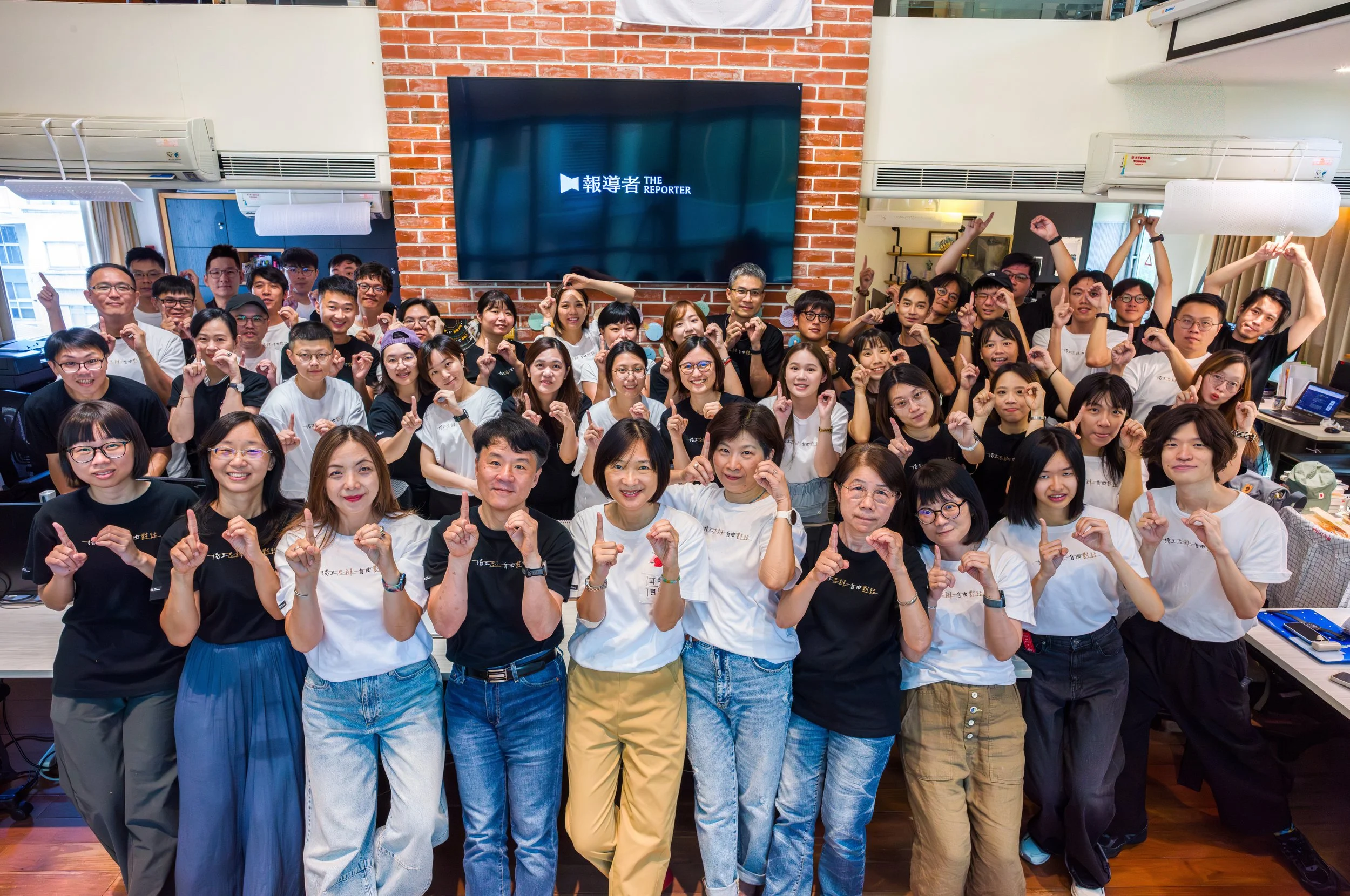
By: Waiting Tseng & Sven Li
Taiwan is one of Asia’s most vibrant democracies. Our organisation, The Reporter, is a nonprofit newsroom supported entirely through donations. We don’t receive government money nor run ads.
We focus on in-depth reporting. But as media habits continue to change, from short videos to AI-generated summaries, we believe independent newsrooms need a better understanding of how long-term donor supporter relationships are built.
Through the JournalismAI Innovation Challenge, supported by the Google News Initiative we began a project to better understand our financial supporters. We combined data from reading behaviour, article content, donations, newsletters, and social media, hoping to better understand what leads or influences someone to support us.
However, we quickly found a problem: More than 50% of our donors had never registered before donating. That means we have almost no data about what they read or did before they started supporting us. Therefore, we are trying to understand donors whose journeys we don’t have full insights into.
Following the “invisible reader”
This changed how we think about our audience. Many supporters may be “invisible Readers” — they follow our work, but don’t sign up until they donate. Even the data we do have is limited. We currently have fewer than 10,000 donor records that can be connected to reading behaviour data. So instead of trying to find perfect answers, we are looking for small signals. We are exploring signals such as what topics people read before donating, whether different groups of supporters follow different reading journeys, and how these patterns may relate to long-term support.
This search for signals is shaped by a fundamental constraint: Unlike mainstream media outlets that publish dozens of short articles daily to audiences of tens of thousands, The Reporter operates in a very different data environment. Most recommendation and personalisation research assumes a high-volume regime: large reader bases generate dense interaction data, enabling robust A/B testing, statistically significant hypothesis validation, and collaborative filtering at scale.
Our readership per article numbers is in the hundreds (among logged-in readers who have agreed to tracking), and our content is deeply long-form (often spanning several thousand to over 10,000 Chinese characters) published several times a week. Rather than treating this sparsity as a weakness, we take it as a design constraint: instead of leaning on purely statistical or black-box models that require data volumes we do not have, we combine pattern recognition with qualitative validation, grounding signals from reader behaviour in the insights of editorial staff gained through years of experience and systematic donor interviews.

Exploring the engagement and reader revenue link
One thing we are doing is using AI to build a new way of understanding and classifying our reporting. Instead of broad categories, this approach captures more specific and complex topics across our work. With this, we are beginning to explore whether certain topics or reading experiences may relate to long-term support. These are early observations, not conclusions.
Alongside the data analysis, we are planning experiments to explore how readers transition into long-term supporters. Our goal isn’t just to boost donations, but to understand reader retention. While isolated transactions are easy to explain, long-term commitment is far more complex — it relies more on building trust and delivering ongoing value.
We are beginning to see that deeper reading engagement and long-term support tend to go together and our next step is to understand the patterns behind that relationship. For us, this is about more than data. If we can better understand our supporters, we may be able to build a more sustainable model,one that allows journalists to focus on stories that matter, and not only stories that generate revenue.
We are still at an early stage. Our data is incomplete, and many questions remain. But by continuing this work, we hope to better understand what helps people continue supporting independent journalism,and how newsrooms like The Reporter can continue contributing to democracy in Asia.
_____
This article is part of a series providing updates from the second cohort of the JournalismAI Innovation Challenge, supported by the Google News Initiative. To read articles from our other grantees, click here.